
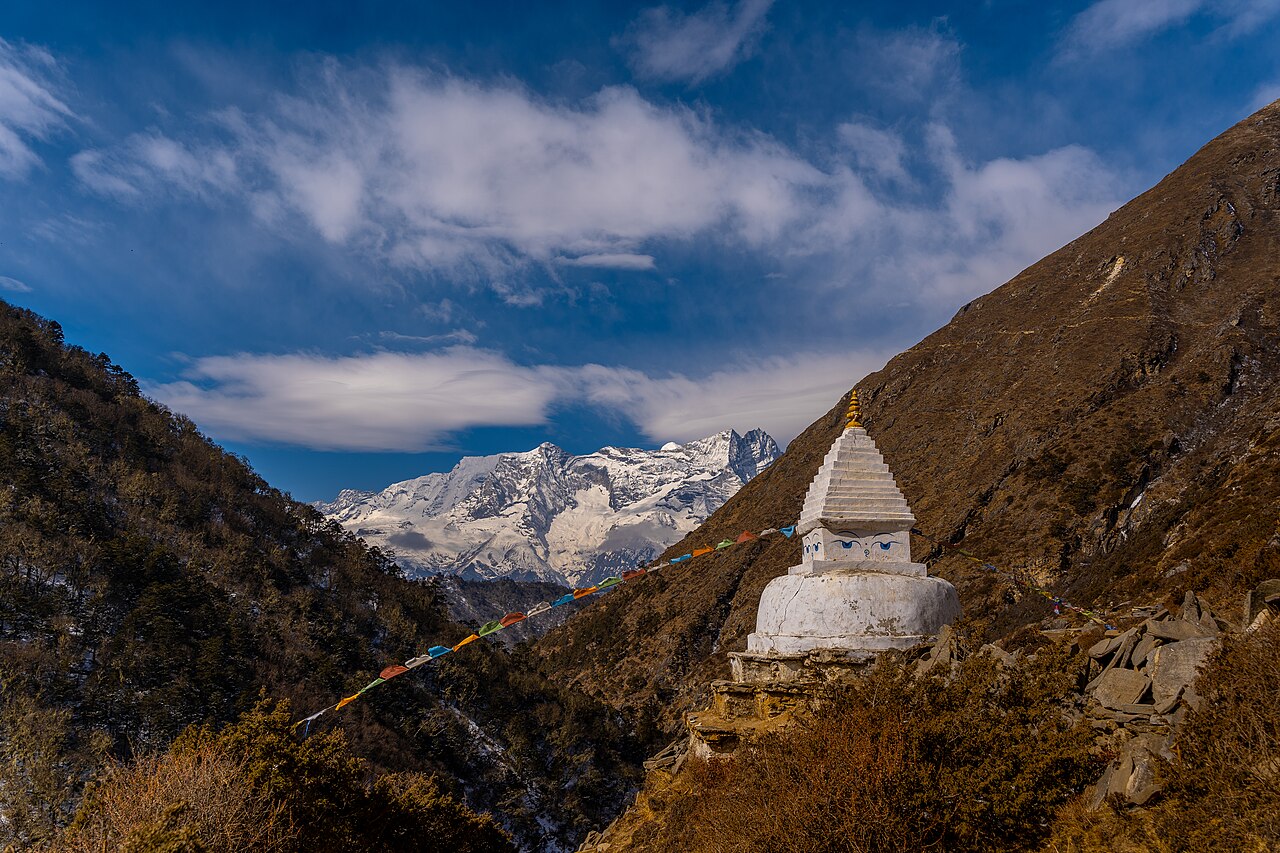
Ask any guide in Namche what decides an Everest trek and you will get the same answer: not your fitness, not your boots — the month you pick. Go in October and the Himalaya poses like a postcard. Go in July and you will stare at clouds for two weeks while your Lukla flight cancels daily. The short answer veterans give: October–November or April–May. Check live conditions anytime on our trekking-weather page; below is the full month-by-month picture.
Every month at Base Camp, honestly
| Month | Day / Night at EBC | Crowds | Verdict |
|---|---|---|---|
| January–February | −15° / −25° | Nearly empty | Experienced only; some teahouses shut |
| March | −7° / −15° | Moderate | Good value; rhododendrons waking up low down |
| April | +2° / −10° | High | Best of spring — expedition buzz at Base Camp |
| May | +5° / −5° | Moderate | Warmest; afternoon cloud builds late month |
| June–August | +8° / −1° | Minimal | Avoid — monsoon, leeches below Namche, Lukla chaos |
| September | +5° / −5° | Low–moderate | Good in the second half as monsoon clears |
| October | +2° / −10° | Peak | Best overall — clearest skies of the year |
| November | −1° / −14° | Moderate | Great — October clarity, fewer people, colder nights |
| December | −7° / −20° | Low | Cold but clear; for the well-equipped |
October vs April: pick your flavour
Both are superb and the choice is really about vibe. October comes right after the monsoon has scrubbed the sky clean — visibility is absurd, routinely 100 km plus, and the air feels washed. It coincides with Dashain and Tihar, so the trail has a festive hum and you may catch Mani Rimdu dances at Tengboche monastery. The price: peak crowds, full teahouses, book 4–6 months out. April brings spring colour — rhododendron forests burning red and pink below 3,500m — plus the Everest expedition season, when Base Camp turns into a tent city of summit teams and the whole valley crackles. Slightly hazier afternoons than October, slightly fewer crowds. First-timers cannot go wrong with either; photographers chasing the sharpest light usually take October.
Lukla flights: the real boss fight
Here is what brochures underplay: the 35-minute flight to Lukla is the most weather-sensitive hop in the country, needing clear windows at both ends, and it only flies in the morning. In October and April it is reliable; in June–August cancellations are routine and measured in days, not hours. The fix is boring but non-negotiable: keep two buffer days in Kathmandu (three or more in monsoon) and never book your international flight home for the evening you walk out. Flights now mostly leave from Ramechhap in peak season — a 4 a.m. bus ride your agency will arrange.
What to pack (the short list that matters)
Nights at Base Camp sit around −10° even in good months, and wind chill on Kala Patthar at sunrise is savage — so a sleeping bag rated to −20°C is the one non-negotiable, year-round. Layer everything, carry a real rain shell whatever the forecast says (mountain weather flips in an hour), and break boots in before Lukla, not after. Teahouses provide blankets but your bag is your insurance. Diamox? Talk to your doctor at home, not to the pharmacist in Namche.
Permits and money, briefly
EBC needs the Sagarmatha park entry plus the Khumbu local permit (about NPR 6,000 all in, no TIMS), and since 2023 you must trek with a licensed guide. Full verified breakdown in our 2026 permits guide.
Photo: Babin Dulal via Wikimedia Commons (CC BY-SA 4.0).