
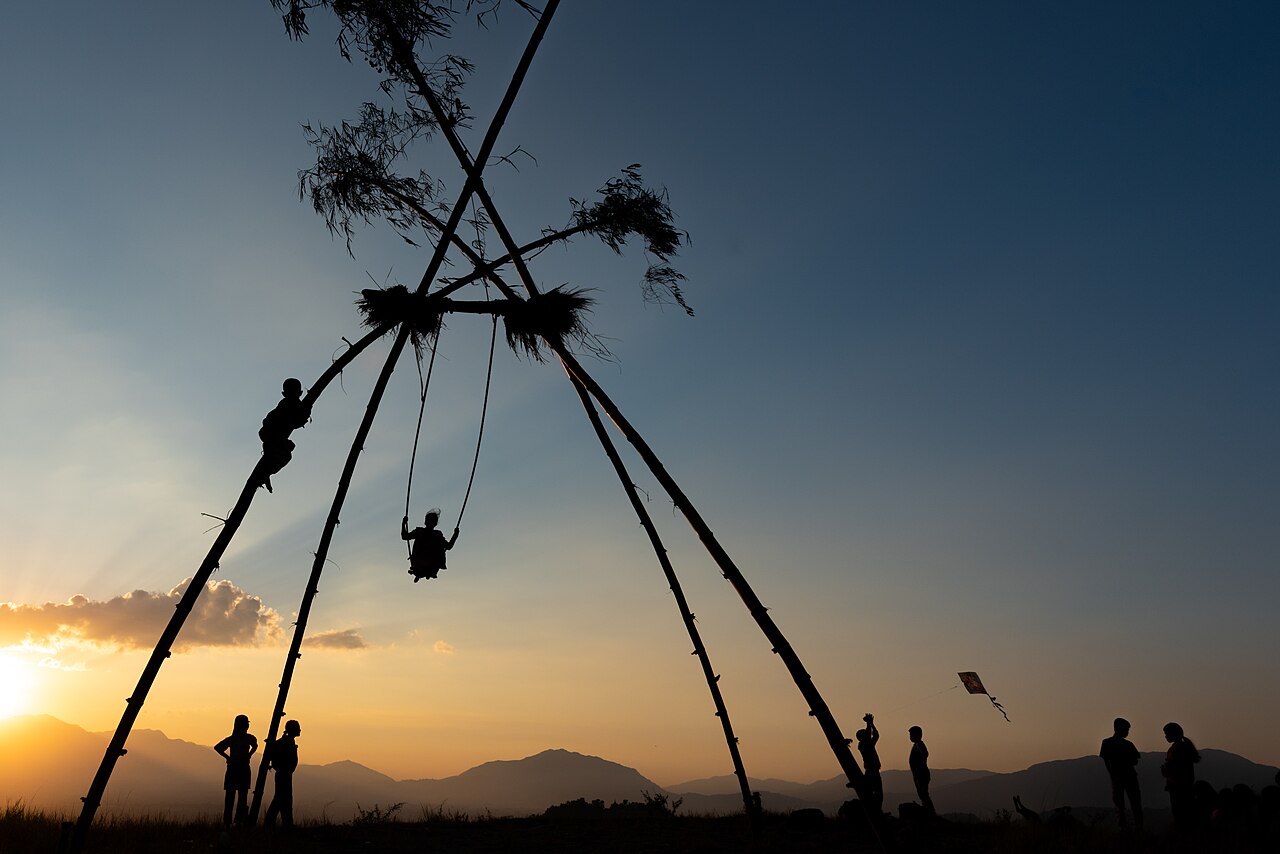
Every autumn Nepal runs on two festivals. Dashain is the big one — fifteen days when families gather, elders place tika and jamara on foreheads, kites fill the sky over the Valley, and the country basically exhales. Tihar follows a couple of weeks later: five days of lights,-steeped in oil lamps and marigold, when crows, dogs, cows and brothers each get their own day of honour. In 2026 (2083 BS) both fall late because of a quirk in the lunar calendar explained below. Bookmark the dates, then track the daily tithi on our panchang page.
Dashain 2026 — the fifteen days
Dashain runs the bright fortnight of Ashwin into Kartik, building from the first seed-planting to the tenth-day climax:
| Day | Nepali date | Gregorian |
|---|---|---|
| Ghatasthapana (Day 1, jamara planted) | Asoj 25 | 11 Oct 2026 |
| Fulpati (Day 7) | Kartik 1 | 18 Oct 2026 |
| Maha Ashtami (Day 8) | Kartik 2 | 19 Oct 2026 |
| Maha Navami (Day 9) | Kartik 3 | 20 Oct 2026 |
| Vijaya Dashami (Tika day) | Kartik 4 | 21 Oct 2026 |
| Kojagrat Purnima (full moon close) | Kartik 9 | 26 Oct 2026 |
The tika itself happens on Vijaya Dashami and keeps going for days after — younger relatives queue up at elders' homes for blessings (and dakshina) well past the tenth day, so do not panic if you cannot make it on the 21st itself.
Tihar 2026 — five days of lights
Tihar is shorter, sweeter, and up later at night. Each day honours someone different, walking from the dark fortnight into the bright one:
| Day | Honours | Gregorian |
|---|---|---|
| Kaag Tihar | Crows, the messengers | 6 Nov 2026 |
| Kukur Tihar | Dogs — garlands and tika | 8 Nov 2026 |
| Laxmi Puja (Deepawali) | Goddess of wealth, lamps everywhere | 9 Nov 2026 |
| Govardhan Puja / Mha Puja | Oxen; Newar self-worship | 10 Nov 2026 |
| Bhai Tika / Kija Puja | Brothers and sisters | 11 Nov 2026 |
| Chhath Parva | The sun, at riverbanks | 15 Nov 2026 |
Why do the dates slide every year?
Short version: Nepal runs two clocks at once. Bikram Sambat is the civil solar calendar on your wall; the festivals follow the lunar panchang — Dashain is literally the fifteen moon-days of Ashwin's bright half, Tihar the five moon-days straddling Kartik's dark-to-bright turn. A lunar year is about 11 days shorter than a solar year, so the festivals would drift earlier every year — except every 32-odd months the calendar inserts a whole extra month, Adhika Masa, to catch up. That reset shoves the festivals about three weeks later, which is exactly what happened in 2023 and again in 2026 (Adhika Jyeshtha). So no, the panchang committee did not make a mistake — the moon did it.
Planning around the festivals
A few things visitors and returnees learn the hard way. Book transport before Fulpati. Buses out of Kathmandu sell out for days and the Kalanki queues become legend — tickets for the 17th–18th vanish first. Offices and banks run skeleton hours from Dashami through Purnima, so finish paperwork early. If you are invited for tika, go with an empty forehead and leave with a full stomach; small cash dakshina for kids is customary, not mandatory. And photographers: Kojagrat full-moon night over the Valley and Laxmi Puja's lamp-lit courtyards in Patan and Bhaktapur are the two most photogenic nights of the Nepali year.
Sources
Seeded from the Nepal Panchanga Nirnayak Samiti calendar, cross-checked with Hamro Patro and Nepali Patro. Daily tithi, nakshatra and holiday flags: /panchang.
Photo: Safalphotos via Wikimedia Commons (CC BY-SA 4.0).